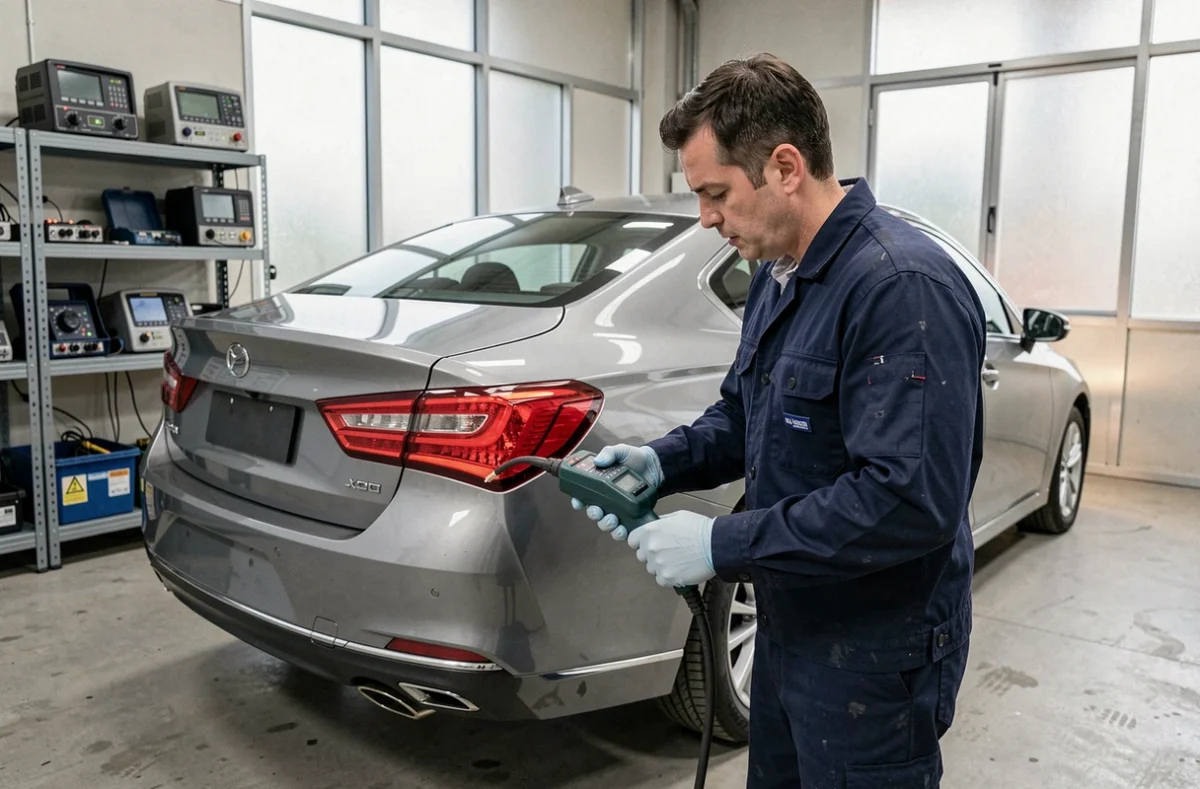
Euro 6 and Euro 6d share the same emissions limits for petrol vehicles. The difference is not in the regulatory thresholds, but in how manufacturers must prove that their engines comply with them. Understanding this distinction means separating what is measured in laboratory tests (WLTP) from what is measured in real-world driving tests (RDE).
Petrol emissions limits: Euro 6 vs Euro 6d in a table
The table below summarises the limits for regulated pollutants that apply to petrol passenger cars (category M1). The values remain the same from one stage to the next; it is the verification procedure that changes.
| Pollutant | Euro 6 (2015) | Euro 6d-TEMP | Euro 6d |
|---|---|---|---|
| NOx (nitrogen oxides) | 60 mg/km | 60 mg/km | 60 mg/km |
| CO (carbon monoxide) | 1 000 mg/km | 1 000 mg/km | 1 000 mg/km |
| Particulate matter (mass) | 4,5 mg/km | 4,5 mg/km | 4,5 mg/km |
| Particulate matter (number, direct injection) | 6 x 10¹¹/km | 6 x 10¹¹/km | 6 x 10¹¹/km |
| Laboratory cycle | NEDC then WLTP | WLTP | WLTP |
| Mandatory RDE test | No | Yes (higher conformity factor) | Yes (lower conformity factor) |
The relationship between conventional petrol engines and the Euro 6 standard is therefore based on a set of limits that has remained stable since 2015. What has changed is how rigorously compliance with those limits is checked.

RDE testing and the conformity factor: what really distinguishes Euro 6d-TEMP from Euro 6d
Until the original Euro 6 standard, emissions were measured exclusively in a laboratory using a standardised cycle. Manufacturers controlled the conditions: temperature, speed and driving profile. The discrepancies between certified results and real-world emissions, widely documented after the diesel engine scandal, led the European Union to introduce RDE testing.
Euro 6d-TEMP: the first phase of real-world driving tests
The Euro 6d-TEMP stage made an RDE test mandatory alongside the WLTP cycle. A portable emissions measurement system (PEMS) is fitted to the vehicle, which is driven in urban areas, on roads and on motorways under varying altitude and temperature conditions.
However, the conformity factor applied during this temporary phase was more lenient. Emissions measured on the road could exceed the laboratory threshold by a significant margin, to account for uncertainties in PEMS measurements.
Euro 6d: a tighter conformity factor
The Euro 6d standard, mandatory for all new vehicles registered since January 2021, reduced this conformity factor. In practice, this means that the permitted gap between the official threshold and real-world emissions is smaller.
For a petrol engine, the impact is direct: engine calibration, catalytic converter management and, where applicable, the particulate filter must perform more consistently under varying conditions, not just within the controlled laboratory test window.
Petrol particulate filter: equipment associated with direct injection
The move to Euro 6d-TEMP and then Euro 6d accelerated the adoption of the petrol particulate filter (GPF) on direct-injection engines. This point deserves separate attention because it challenges a common misconception: a recent petrol vehicle is not necessarily without an after-treatment system.
- Direct-injection petrol engines produce fine particles in numbers comparable to some older diesel engines, due to the partial combustion of fuel injected at high pressure.
- The regulatory limit for particle numbers (6 x 10¹¹ per kilometre) applies specifically to these engines, making the GPF almost standard on Euro 6d models.
- Indirect-injection petrol engines (port injection), which are less common in new vehicles, remain below this limit without a dedicated filter.
The petrol particulate filter has become standard equipment on most direct-injection engines certified to Euro 6d. It requires less maintenance than a diesel particulate filter (DPF), but can become clogged when used exclusively for low-speed urban driving.
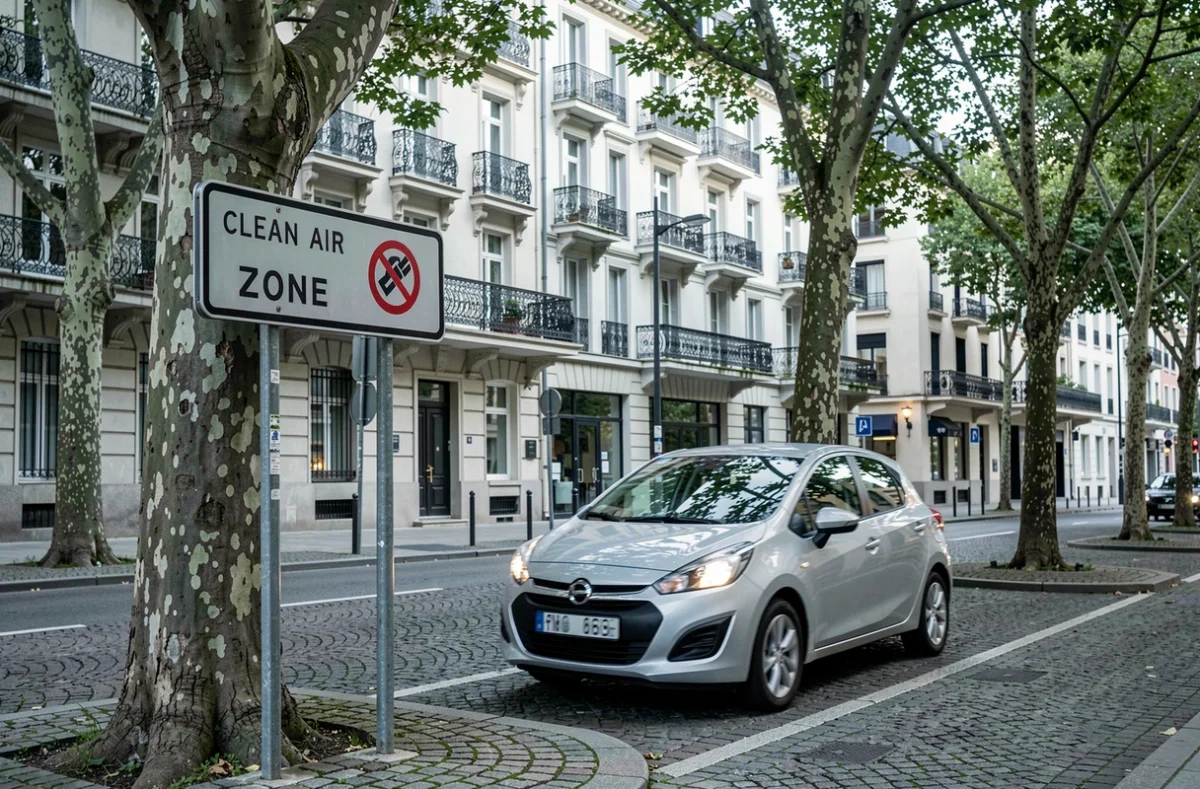
How to identify your petrol vehicle’s Euro standard on the registration certificate
Field V9 on the French registration certificate indicates the vehicle’s Euro standard. For Euro 6 standards, the codes are not always intuitive, as several different codes are used.
- Euro 6 BA, BB or BC designations correspond to Euro 6b, the first stage applicable to M1 and N1 class I vehicles.
- Euro 6 AG, BG or DG designations indicate Euro 6d-TEMP for the same categories.
- Euro 6 AJ, AM or AP designations correspond to full Euro 6d for M1 and N1 class I vehicles.
The alphanumeric code on the certificate of conformity determines access to low-emission zones. A vehicle classified as Euro 6d qualifies for a Crit’Air 1 sticker, just like a Euro 6b petrol vehicle, but the distinction can affect resale value or access to certain European LEZs that differentiate between subcategories.
Euro 7 from November 2026: what impact will it have on current Euro 6d petrol vehicles?
The Euro 7 standard, due to come into force in November 2026 for new cars, will not change the status of vehicles already registered as Euro 6d. It will, however, introduce new requirements for brake and tyre wear emissions, as well as tighter pollutant limits under extreme conditions (low temperatures, heavy loads).
Euro 6d vehicles will remain compliant with current French low-emission zone regulations. Their Crit’Air 1 sticker will not be affected by the introduction of Euro 7. For buyers of used petrol cars, the distinction between Euro 6b and Euro 6d has less to do with driving restrictions than with the reliability of emissions measurements in real-world use.