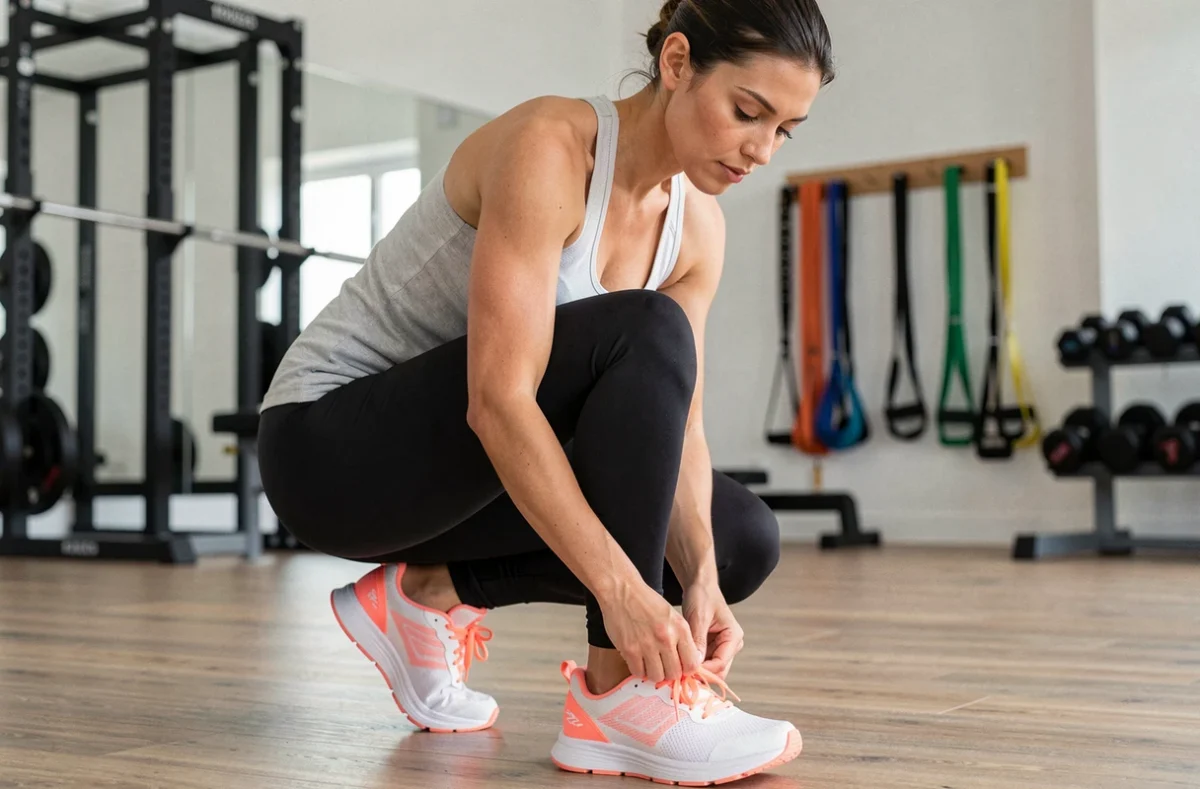
Choosing fitness shoes as a woman means weighing up several technical factors that vary depending on the type of training you do. A flat sole or substantial cushioning, lateral support or maximum flexibility, a high or near-zero drop: each feature meets a specific biomechanical need. Comparing these criteria against the activities you do at the gym makes it easier to identify the right type of shoe.
Fitness, running and training shoes: how the sole makes a difference
Buying guides often list the same criteria (cushioning, support, lightweight design) without explaining why running shoes are unsuitable for a strength-training class. The main difference lies in the sole’s design and how the cushioning is distributed.
| Feature | Running | Cross-training / fitness | Weightlifting |
|---|---|---|---|
| Drop (heel-to-toe height difference) | Medium to high | Low to medium | Raised, rigid heel |
| Cushioning | Substantial, designed to absorb impact | Moderate, distributed to support multidirectional movement | Minimal |
| Lateral stability | Low (linear movement) | Enhanced (lateral movements, pivots) | Maximum (fixed footing) |
| Sole flexibility | High in the forefoot | Medium (a balance of rigidity and flexibility) | Very low |
| Main use | Running | Group classes, HIIT, circuit training | Squats, clean and jerk |
Designed for a linear heel-to-toe motion, running shoes offer little lateral support. Wearing them for lateral movements or jumps increases the risk of ankle instability.
Conversely, weightlifting shoes, which are rigid and have a raised heel, make it easier to descend into a squat but are not well suited to deadlifts or jumps. For mixed sessions involving both weights and movement, a firm, relatively flat cross-training shoe offers the best compromise.
Before choosing, the easiest approach is to list the movements you do most often in your workouts. A guide to women’s fitness shoes can help you narrow down your options based on your main activity.
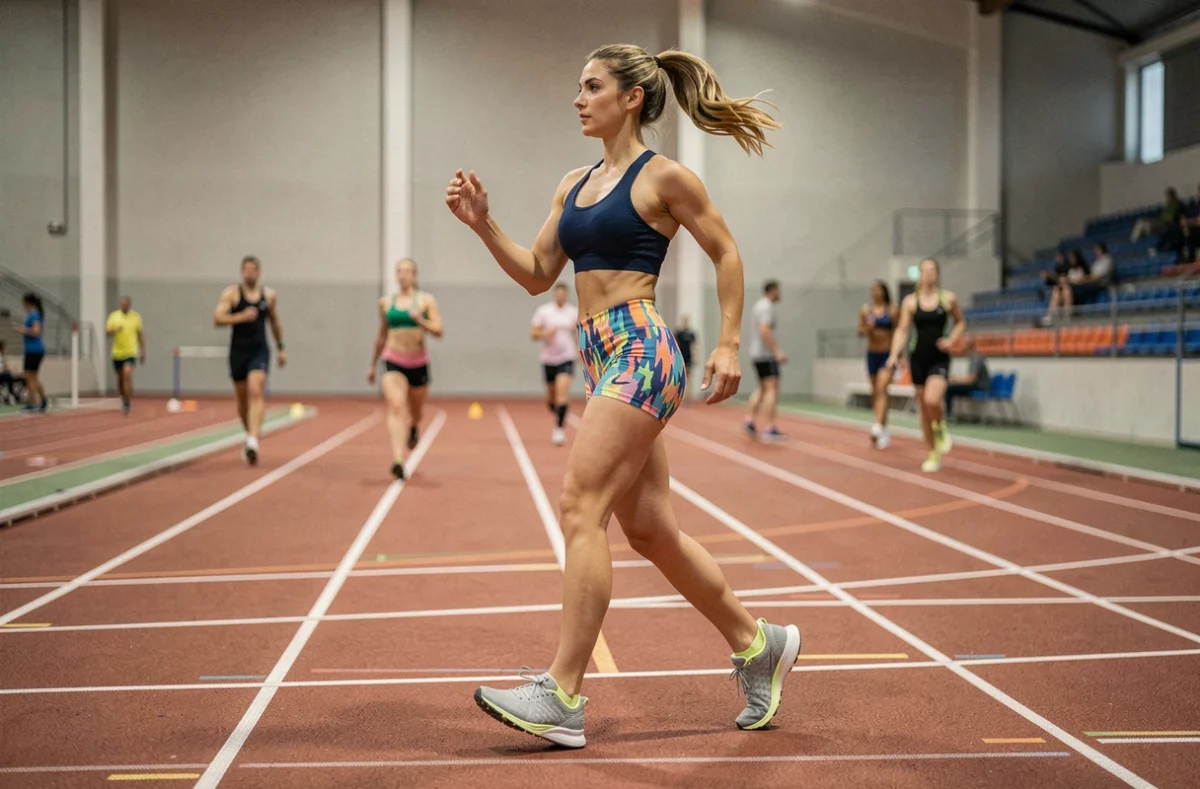
Stability and lateral support: key factors for cardio and group classes
Step, aerobics and dance fitness classes put your feet through movements in every direction. The priority here is neither cushioning nor lightweight design, but the shoe’s lateral stability.
Reinforcement around the midfoot and a sole that flares slightly at the base help reduce the risk of twisting during rapid changes of direction. The upper (the top part of the shoe) also plays a role: a mid-cut upper provides more ankle support than a low-cut one, at the cost of slightly reduced mobility.
- For step and aerobics, look for a sole with good grip on smooth floors and pronounced lateral reinforcement, as you often land on one foot and change direction quickly.
- For HIIT and circuit training, look for a balance between moderate cushioning (for landing jumps) and a sole firm enough for floor-based strength exercises.
- For dance fitness classes (Zumba, Sh’Bam), a sole with a pivot point under the forefoot makes it easier to turn without gripping the floor.
A sole that is too soft under load increases instability. If your workouts regularly include weighted squats or lunges, test the sole’s rigidity by bending it by hand: it should not twist easily from side to side.
Drop and minimalist shoes: the transition matters as much as the model
Drop is the difference in height between the heel and the forefoot. Traditional running shoes have a medium to high drop. Cross-training models generally have a lower drop, while minimalist shoes have a near-zero drop.
Switching abruptly from a high-drop shoe to a minimalist model changes the load on your foot, ankle and calf. The transition should be gradual to give your muscles and tendons time to adapt.
In practice, alternating between your old and new shoes over several weeks can reduce the risk of overloading. Specialists in movement often recommend starting by wearing minimalist shoes only for warm-ups or short sessions.
Flat soles for deadlifts, raised heels for squats
Even within the same strength-training session, the right shoe depends on the exercise. A raised heel helps you squat deeper by compensating for limited ankle mobility. For deadlifts, however, a flat, firm sole provides better contact with the floor and more direct force transfer.
There is no single shoe that works for every strength exercise. Some women keep two pairs at the gym, while others choose a versatile cross-training model and accept a slight compromise for each movement.
Breathability and durability: what the upper reveals about a shoe’s lifespan
The upper determines both thermal comfort and how long a shoe lasts. A breathable mesh upper releases heat and moisture more effectively, helping limit bacterial growth and discomfort during longer workouts.
However, very thin mesh wears out faster in areas subject to friction (toes, sides of the foot). Models that combine breathable mesh with synthetic reinforcements at high-stress points offer a better balance between ventilation and durability.
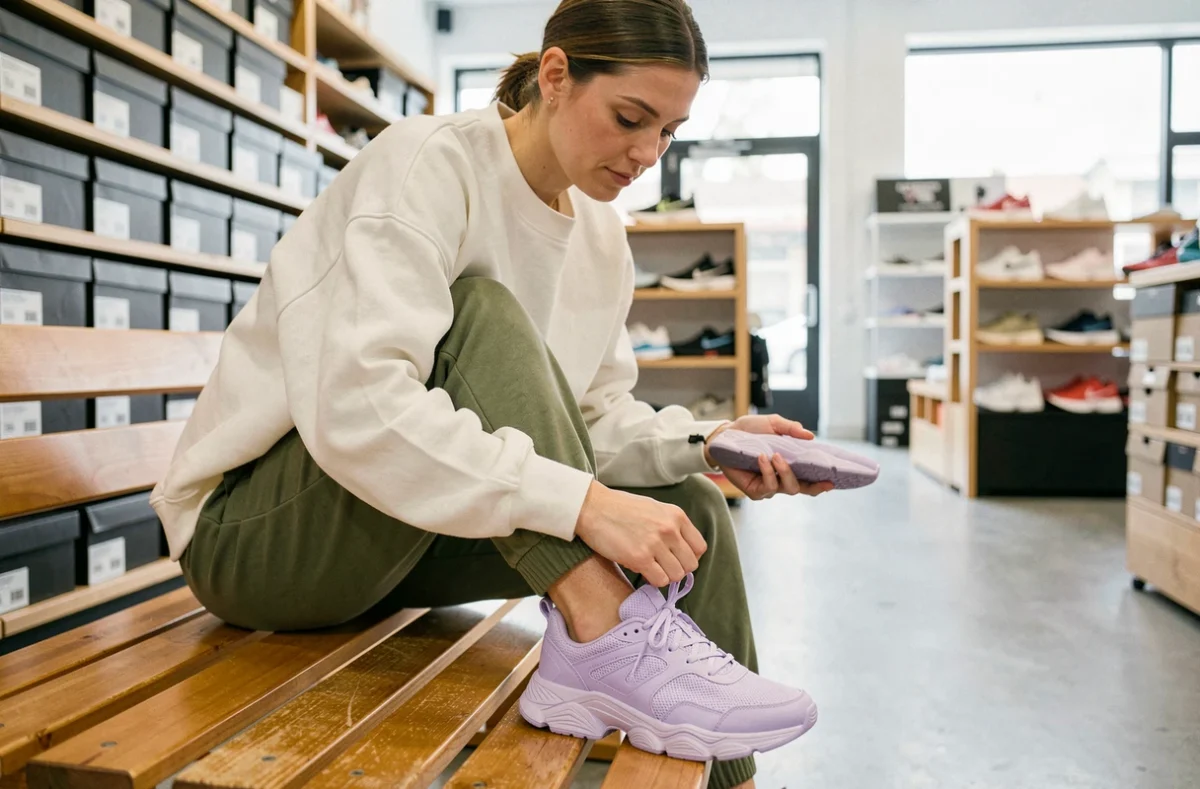
One final detail that is often overlooked: the removable insole. Being able to take it out to wash it or replace it with an orthotic insole suited to your arch can make a significant difference to long-term comfort, especially for women who work out several times a week.
Choosing fitness shoes is less about the brand and more about how well the model’s technical design matches the movements you actually do. List your three most frequent exercises, check the sole’s lateral rigidity and make sure the drop suits your ankle mobility: these three checks are enough to rule out most unsuitable pairs.