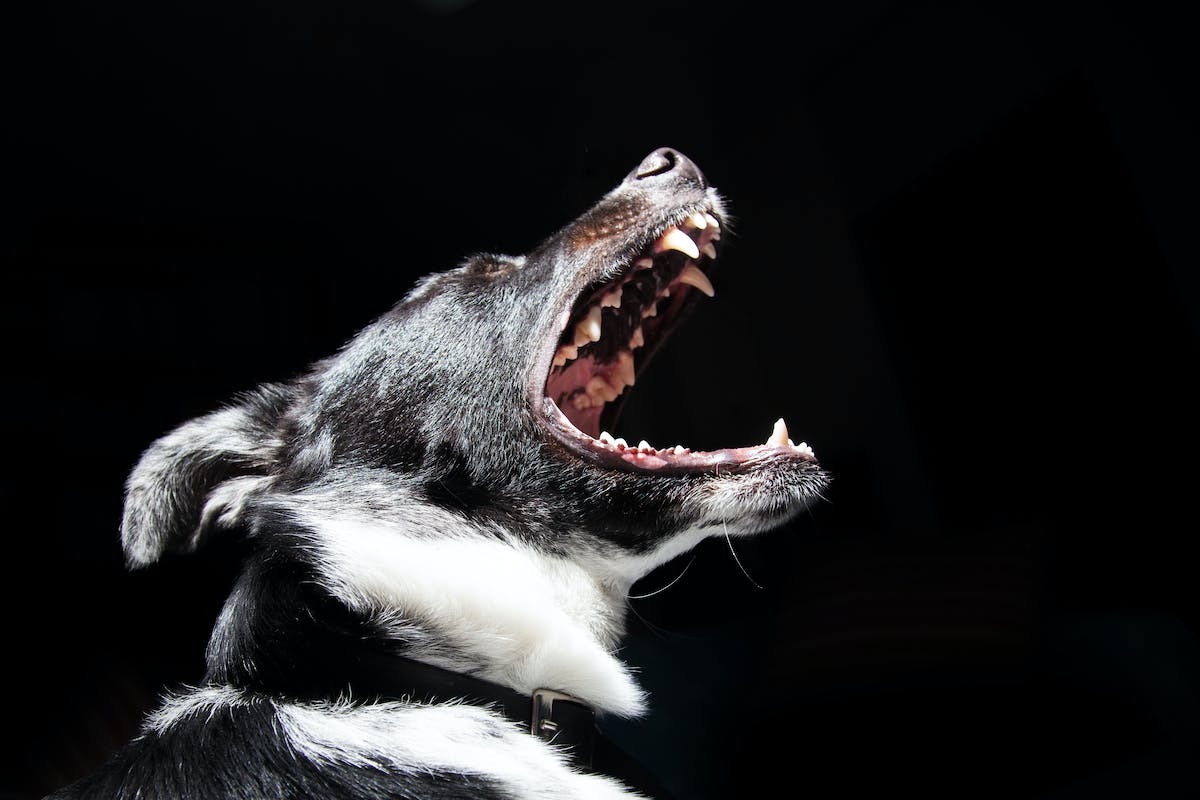
Let’s dive into the fascinating world of our four-legged companions, dogs. Their jaw, often underestimated, is actually a powerful and complex tool. From the ability to crush bones to expressing joy, the canine jaw plays an essential role in their daily life. The chewing force varies from breed to breed, with significant implications for health, behavior, and even toy selection. Get ready for a deep immersion into the mechanics of the canine jaw, its importance, and the variations among different breeds.
The Amazing Power of the Canine Jaw
The anatomical adaptations that make the dog’s jaw so powerful are the result of a complex combination of factors. Among them, the masseter and temporal muscles, located on either side of the dog’s skull, are responsible for much of this force when they contract to close the jaws.
The temporomandibular joint also plays a crucial role in this impressive mechanics. This robust joint is designed to withstand the stress placed on the jaw while the dog chews or catches its prey, providing overall stability and seamless mobility.
The dental composition of canines is also an essential element in this process. Their elongated and sharp canines are specifically shaped to firmly grasp and hold any object or prey that falls between their powerful jaws.
However, these characteristics can vary depending on the specific breed of dog. Take, for example, the Belgian Malinois • commonly referred to as Malinois • renowned for its exceptional ability to exert extreme pressure with its jaw. The ‘Malinois jaw pressure per cm²’ can reach up to 6 kg/cm²! To put this into perspective, it’s nearly double what an average man could generate!
It is clear that understanding these anatomical adaptations not only offers a fascinating insight into our overall understanding of canines but also underscores the crucial importance of establishing adequate preventive measures in dog training to avoid any regrettable situations due to their formidable potential.
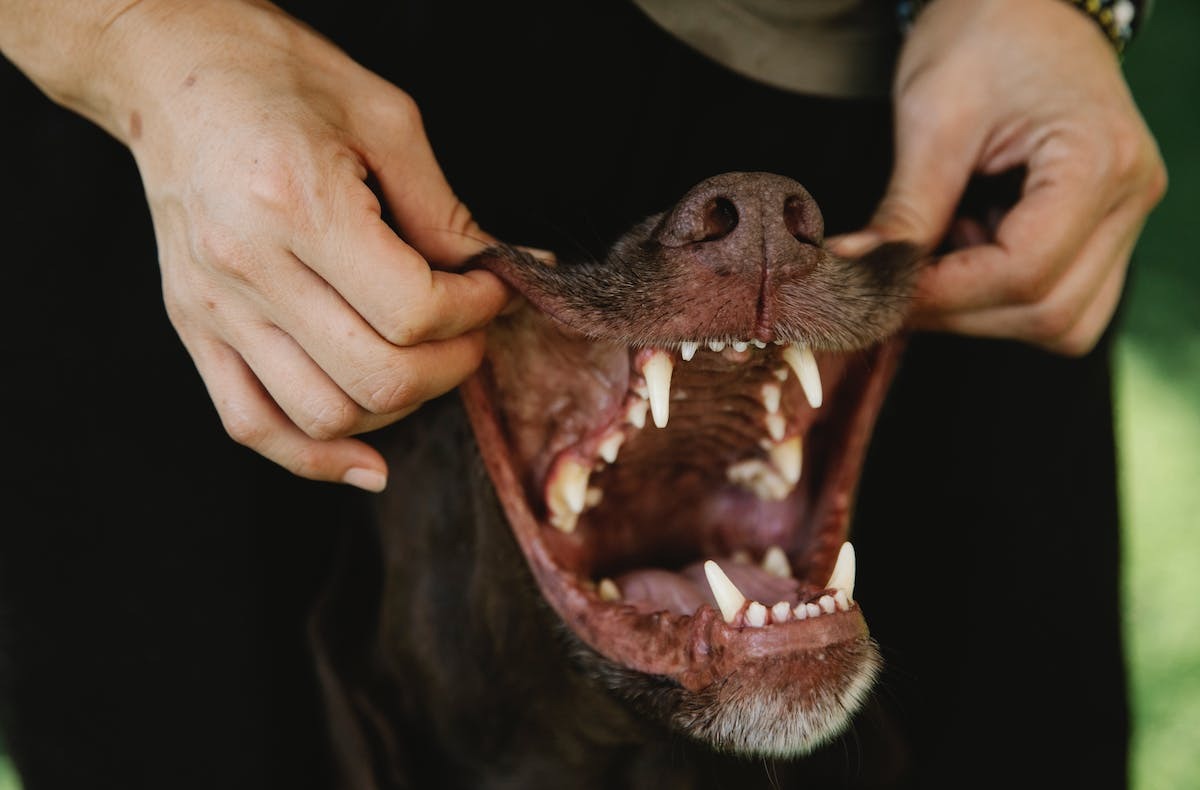
The Anatomical Secrets of the Dog’s Jaw
Continuing our exploration of the surprising capabilities of the canine jaw, it is vital to highlight that the bite force varies from breed to breed. Experts have conducted extensive studies to determine the differences between breeds in terms of the power and pressure exerted by their bite.
Among the dog breeds known for their astonishing strength is the Rottweiler. With an imposing muscular build and solid bone structure, this dog exhibits great power in its jaw. The average pressure it can exert when it bites is estimated to be around 2,000 pounds per square inch (psi). This is more than double the force produced by a Doberman Pinscher or a Pitbull Terrier.
Similarly, the German Shepherd is not to be overlooked with its impressive ability to apply considerable pressure when it bites.
Bite Force by Dog Breed
This bite force has significant implications in the daily lives of domestic dogs. It can be an asset when it comes to protecting their territory and loved ones. A dog with a powerful jaw is capable of deterring potential intruders and can provide additional protection to its family.
You must also understand the risks associated with this impressive strength. A bite from a powerful dog can cause serious injuries, even fatal ones, if not controlled or channeled properly. This highlights the crucial importance of appropriate education and socialization from a young age to teach dogs to use their jaws with care.
Canine behavior professionals also recommend close supervision when children are around breeds known for their high bite force. You must observe their body signals.
Some specific professions often require canine participation due to their unique ability to apply considerable pressure with their robust jaws. Military and police forces utilize the natural skills of dogs to perform various specialized tasks such as security, search and rescue, and mine detection, thanks to the strength of their jaws.
The power of the jaw in domestic dogs is a fascinating trait that varies by breed. You must approach this characteristic with caution and responsibility as owners. Proper socialization and compassionate education are essential to channel this natural strength and ensure harmonious coexistence between humans and their canine best friends.
The Consequences of Jaw Power in Domestic Dogs
When you own a powerful-jawed dog, it is crucial to take certain precautions to ensure everyone’s safety. Here are some tips to follow:
Socialization and education: As mentioned earlier, adequate socialization from a young age is essential for powerful-jawed dogs. They need to be accustomed to different situations and people to avoid any potential aggression. A training approach based on positive and respectful methods will also help establish a strong relationship between you and your canine companion.
Using appropriate toys: Powerful-jawed dogs often need to chew to entertain themselves and exercise their robust jaws. It is crucial to choose toys suitable for their strength to avoid any risk of choking or dental injury.
Supervision during interactions with other animals or children: Due to their sometimes dominant nature, it is important to be vigilant during interactions with other animals or children to prevent any undesirable behavior.
Teaching bite control: One of the main concerns related to powerful-jawed dogs is the potential for injuries caused by their sharp teeth. It may be helpful to teach your dog commands such as ‘drop it’ or ‘gentle’, so they can control the strength of their bite during play or interactions.
The responsibility of the owner: It is essential for any owner of a powerful-jawed dog to fully assume their responsibility by ensuring that their pet is well-educated and socialized. This also includes adhering to local regulations regarding potentially dangerous breeds and possibly using a muzzle in public places.
By following these precautions, you can enjoy the company of a powerful-jawed dog while ensuring the safety and well-being of everyone around them.
Precautions to Take with Powerful-Jawed Dogs
In our society, many myths and misconceptions circulate regarding the power of a dog’s jaw. It is time to dispel these erroneous beliefs and learn more about the subject.
The power of a dog’s jaw is not directly related to its temperament or propensity for aggression. A dog’s personality is influenced by various factors such as its upbringing, environment, and socialization. Remember not to generalize and not to judge each individual based on their physical characteristics.
Some owners may fear that their dog could destroy everything in its path due to the strength of its jaw. Note that all dogs instinctively need to chew to explore their environment or relieve dental pain related to teething in young subjects. By providing appropriate and sufficiently sturdy toys, you can channel this destructive energy towards suitable objects.
While it is true that some breeds are anatomically endowed with a wider skull structure, this does not necessarily mean they have a greater bite force. Musculature and coordination are also important factors to consider. Therefore, do not judge a dog solely based on its appearance.
Note that this does not mean they are predisposed to be dangerous by nature. Like any other dog, proper education and adequate socialization greatly contribute to minimizing the risk of accidents.
Consider dispelling these widespread myths regarding jaw power in dogs. Each individual should be considered for its unique personality rather than stigmatized due to its physical characteristics. Responsible education and a thorough understanding of canine behavior allow for a harmonious environment between humans and their loyal companions.
Unraveling Myths About Canine Jaw Power
Scientific studies have been conducted to better understand the power of the jaw in dogs and demystify some misconceptions. These research efforts have revealed that certain factors do indeed influence a dog’s bite force.
It is important to note that a dog’s weight plays a role in its bite force. Heavier dogs tend to have a more powerful jaw due to their greater muscle mass. This does not automatically mean they are more aggressive or dangerous.
The shape of the teeth and joints also plays a crucial role in a dog’s bite power. Breeds that possess sharp teeth and strong joints can exert more pressure when they close their jaws. However, this should not be interpreted as an absolute indicator of the dog’s temperament.
It is also worth mentioning that the inherent predatory instinct in dogs can influence their behavior when using their bite force. Some dogs may show increased intensity when engaged in play or during interactions with their peers. It is essential to educate your pets properly so they can channel this energy without causing any harm.
It is also interesting to note that not all breeds are created equal in terms of jaw power. Some breeds, like the Rottweiler and Pitbull, are known for their superior physical strength and higher bite power compared to smaller or less muscular breeds. This does not mean that every individual of these breeds will automatically display aggressive or dangerous behavior.
The power of the jaw in dogs is a complex subject that requires a nuanced approach. It is important to judge each dog based on the physical characteristics associated with its breed. Proper education, socialization, and owner responsibility are essential to ensure safety for both the animal and its surroundings.
It is crucial to relay accurate information based on solid scientific data rather than perpetuating harmful stereotypes that can lead to unjust discrimination against certain dog breeds.
It is up to each of us • owners, breeders, or simply enthusiasts • to promote a positive vision of the canine world where all dogs can be appreciated for what they are: loyal companions, each with a unique personality.