In the bustling world of education, stimulating children’s awakening presents a real challenge for parents and educators. With the advent of new teaching methods that combine insights from neuroscience with educational experience, it is now possible to promote optimal development in the youngest. These approaches, often playful and interactive, are designed to engage the child in an active learning process while respecting their individual pace and interests. They open up horizons for the development of various skills, from creativity to critical thinking, in a stimulating and nurturing environment.
The Foundations of Innovative Teaching Methods for Child Awakening
At the heart of innovative teaching methods, the Montessori method stands out as an essential reference, designed by Maria Montessori. This approach, recommended from birth, aims to develop children’s self-confidence and autonomy, rooted in a deep understanding of their developmental needs. Montessori pedagogy invites observation of the child to adapt the educational environment to their growth phases and learning abilities, thus fostering a natural and harmonious awakening.
The Montessori method relies on materials specifically designed to engage the senses and fine motor skills, such as the Montessori observation tower, an adapted piece of furniture that allows the child to explore their environment safely. The proposed activities are simple, respecting the child’s natural rhythm, and aim to encourage autonomous exploration. The advantage of this method lies in its ability to adapt to each child, recognizing and valuing their individual progress.
The Montessori educational practice is also illustrated through the importance given to daily life activities, which are the foundation of developing autonomy and coordination. Children learn through action, whether it’s pouring water without spilling, buttoning clothes, or preparing a snack—actions that build their confidence and allow them to feel competent and active in their own learning. Learning through the Montessori method goes beyond mere accumulation of knowledge to become a complete, structuring, and enriching adventure.

Practical Activities and Educational Games to Stimulate Your Child’s Development
In response to the need to support the awakening of the youngest, a multitude of educational games and practical activities present themselves as valuable allies. Montessori-inspired awakening games, for example, encompass simple yet effective tools designed to awaken the child’s natural curiosity and refine their sensory and motor skills. Among them, the Montessori Mirror serves as a playful activity that promotes concentration and self-recognition.
Wooden rattles, far from being mere toys, play a fundamental role in developing imagination and stimulating the tactile and auditory senses of toddlers. These objects, with their texture and sound, invite children to explore and create, laying the foundations for their future creativity. Their manipulation also encourages hand-eye coordination, a crucial step in developing fine motor skills.
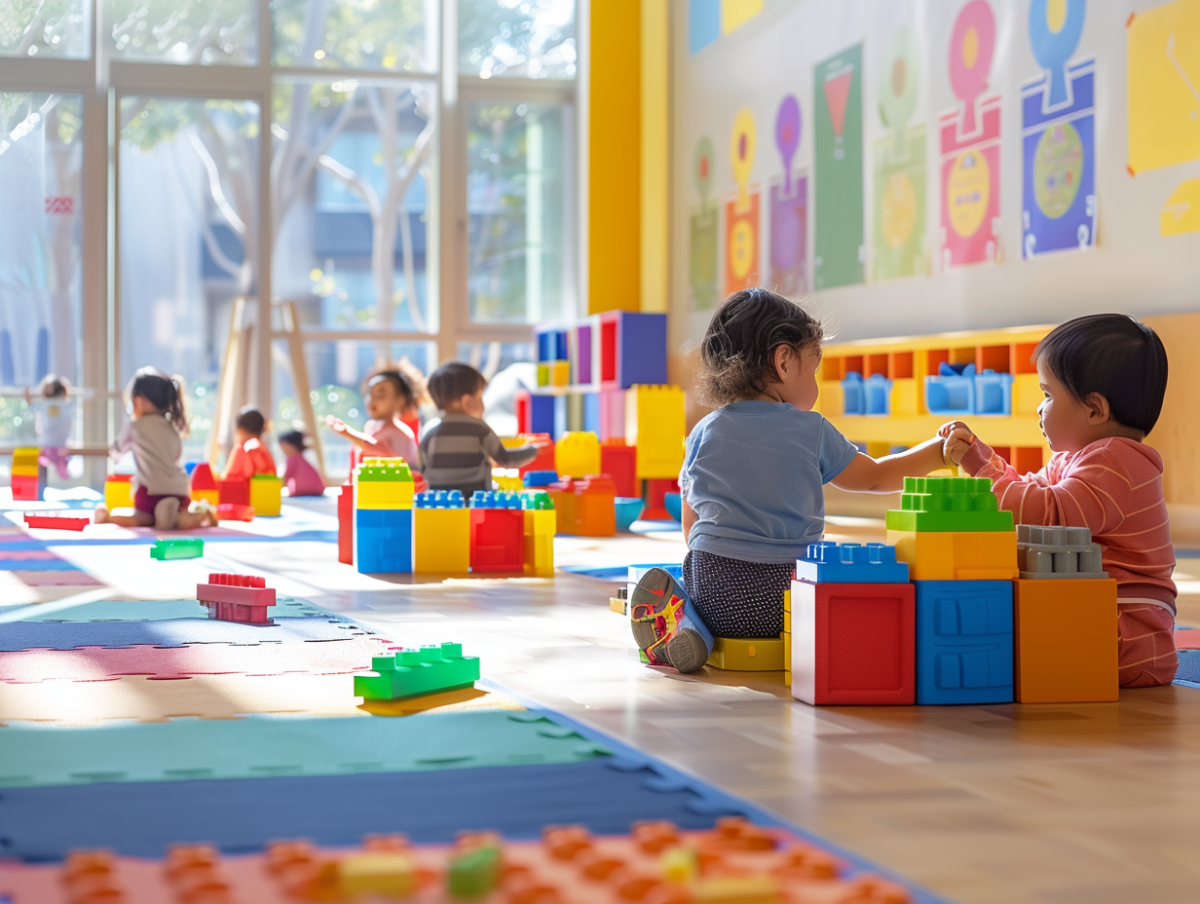
The play mat, recommended by the Montessori method, provides a comfortable and secure space where the child can move freely, discover different textures and colors, and thus stimulate their senses. This play area becomes a ground for autonomous experimentation where the child learns to know themselves and interact with their environment. The play mat is an investment in the child’s autonomy, allowing them to explore at their own pace without excessive adult intervention.
Montessori mobiles and illustrated books are visual supports suitable for the early months of life. The mobiles, with their varied shapes and colors, capture the newborn’s attention and train their ability to track objects visually. The books, on the other hand, introduce the first notions of storytelling and recognition of shapes and colors, establishing the beginnings of understanding and communication. These supports are designed to grow with the child, their complexity adapting as their perceptual abilities refine.