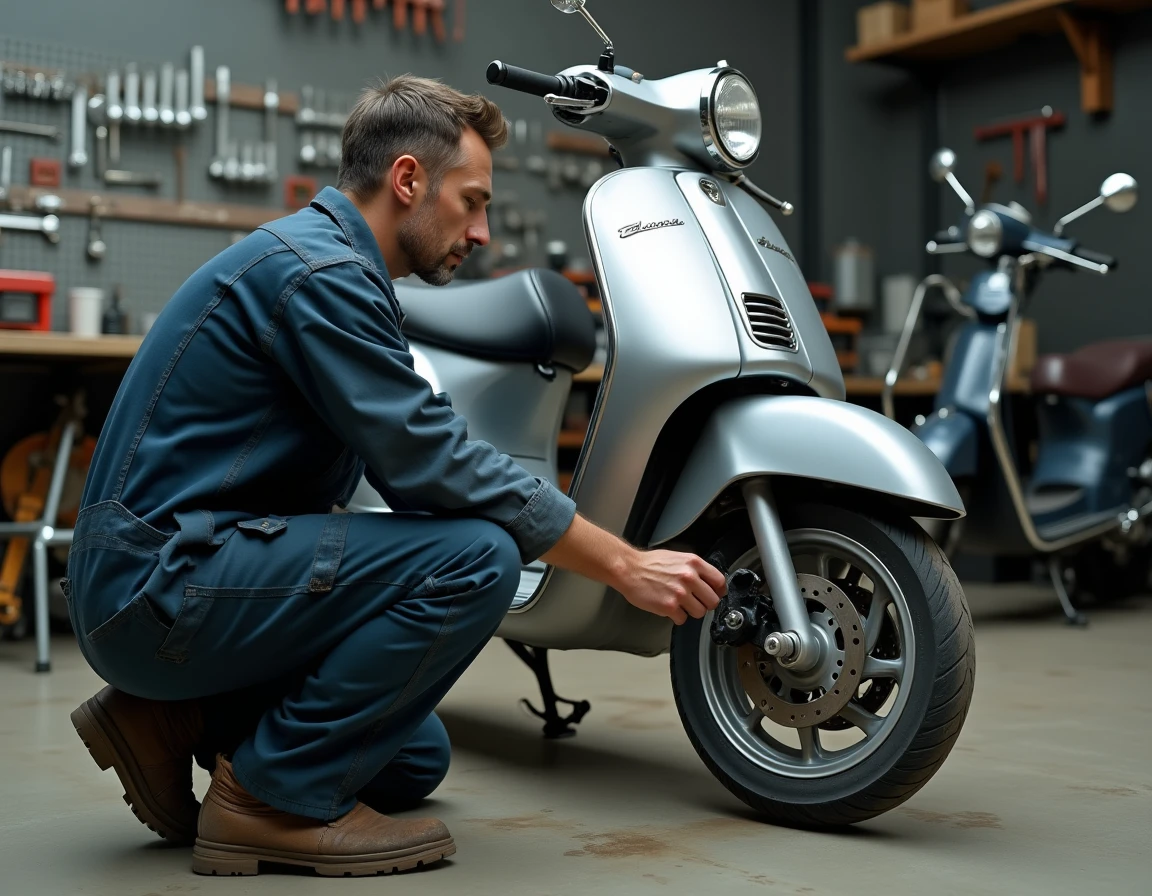
A Honda PCX with 60,000 km on the clock that still starts up with a flick of the wrist is something we regularly come across in classifieds. In contrast, scooters of the same engine size often fail their variator before reaching 25,000 km. The difference isn’t due to luck: it comes down to the type of use, the rigor of maintenance, and some mechanical choices that most owners overlook.
Delivery use versus commuting use: two 125 scooters that age differently
We often talk about the lifespan of a 125 scooter as if there were a universal figure. In reality, the same model used for urban delivery and another reserved for commuting have very different wear patterns.
Scooters used for delivery accumulate constant stop-and-go, run hot in traffic jams, and carry heavy loads (boxes, bags). On specialized ad platforms, you can regularly find 125s that are five to seven years old with between 30,000 and 40,000 km showing signs of a worn clutch, a used variator, and soft suspensions. This is a profile of accelerated wear that general guides almost never distinguish.
In contrast, moderate commuting use (about twenty kilometers a day, clear roads, little stop-and-go) preserves the transmission and engine. A well-maintained 125 scooter used for commuting often exceeds 50,000 km without major intervention. On Honda, Yamaha, or Suzuki models, careful owners reach 100,000 km, which remains realistic as long as the mechanics are treated seriously.
Before wondering how many km a 125 scooter can do, we should first qualify the intended use: the maximum mileage depends less on the model than on what it endures daily.

Engine and transmission maintenance: interventions that push the limits
The longevity of a 125 scooter hinges on three specific mechanical components. Neglecting them is akin to scheduling an expensive breakdown.
Engine oil and air filter
On a thermal 125, oil changes remain the most cost-effective intervention in terms of engine protection. The frequency recommended by manufacturers generally hovers around 3,000 to 5,000 km depending on the models, but in intensive urban use, shortening this interval prolongs the life of the piston rings and cylinder.
The air filter is the second point not to forget. A clogged filter weakens the mixture, raises the temperature, and accelerates internal wear. Replacing it at every oil change, or at least cleaning it, costs almost nothing.
Variator and drive belt
The variator transmission is the Achilles’ heel of 125 scooters. The rollers wear out, the belt loosens, and when you wait too long, the entire variator fails. Feedback varies on the exact replacement frequency depending on the models, but checking the belt and rollers every 10,000 to 15,000 km prevents chain breakdowns.
- Check the condition of the belt (cracks, fraying, loss of width) at each intermediate service
- Replace the rollers as soon as they show visible flat spots, a sign of advanced wear
- Do not wait for the belt to break: it can damage the casing and the torque converter
Coolant on closed circuit models
Liquid-cooled 125 scooters (as opposed to air-cooled) require checking the level and quality of the coolant. An overheating engine loses performance and lifespan. On urban models pushed in traffic jams, chronic overheating remains a frequent cause of premature engine failure.
Electric 125 scooter: a lifespan calculated differently
With the arrival of electric scooters equivalent to 125s, the question of longevity changes in nature. There’s no more variator, no more oil changes, no more belt. The electric motor has very few wear parts.
The limiting factor becomes the lithium battery. On recent models, batteries are designed to last about 50,000 km before a noticeable loss of capacity. Beyond that, the range gradually decreases, which reduces the operational radius without necessarily immobilizing the scooter.
The longevity of the battery directly depends on charging habits. Avoid systematic full charges to 100%, do not let the battery drop below 10%, and charge in a temperate environment to extend its useful life. Conversely, an electric scooter used for delivery with multiple fast charges each day will see its battery degrade faster.
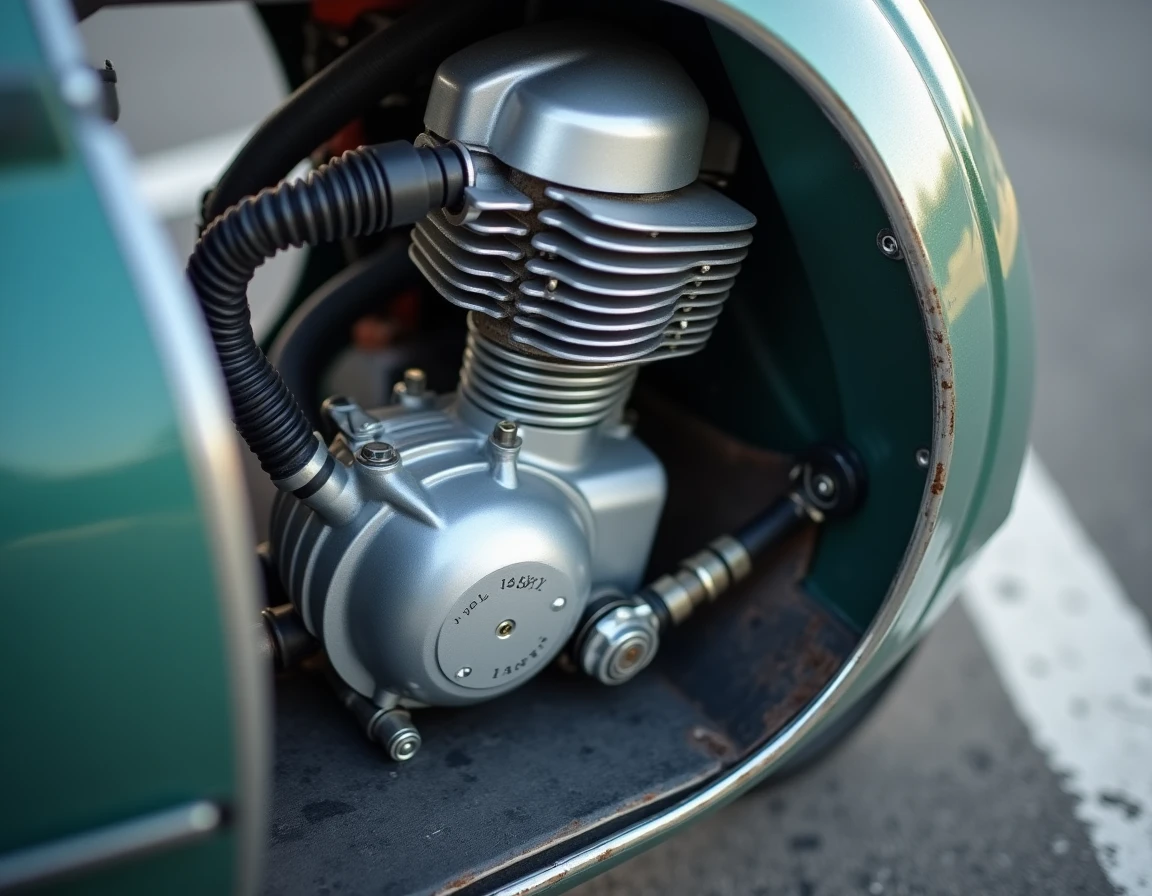
Signs of critical wear on a 125 scooter: when to stop
Rather than setting a mileage limit, it’s better to monitor concrete symptoms that signal mechanical end-of-life.
- An abnormal oil consumption between oil changes, indicating wear of the rings or cylinder
- Unusual vibrations during acceleration, often related to the variator or crankshaft bearings
- A difficult cold start despite a new spark plug and a clean filter, indicating degraded compression
- Metallic noises at idle, indicators of excessive play in the timing or cylinder head
A scooter that accumulates several of these symptoms will cost more to repair than to replace. The calculation is made by comparing the repair estimate to the price of a used model in better condition.
The actual lifespan of a 125 scooter, whether thermal or electric, is not a fixed number. It is built with each respected oil change, each timely belt check, each well-managed charge. An owner who follows their maintenance schedule and adapts their driving to the mechanical profile of their machine will ride well beyond the announced averages.