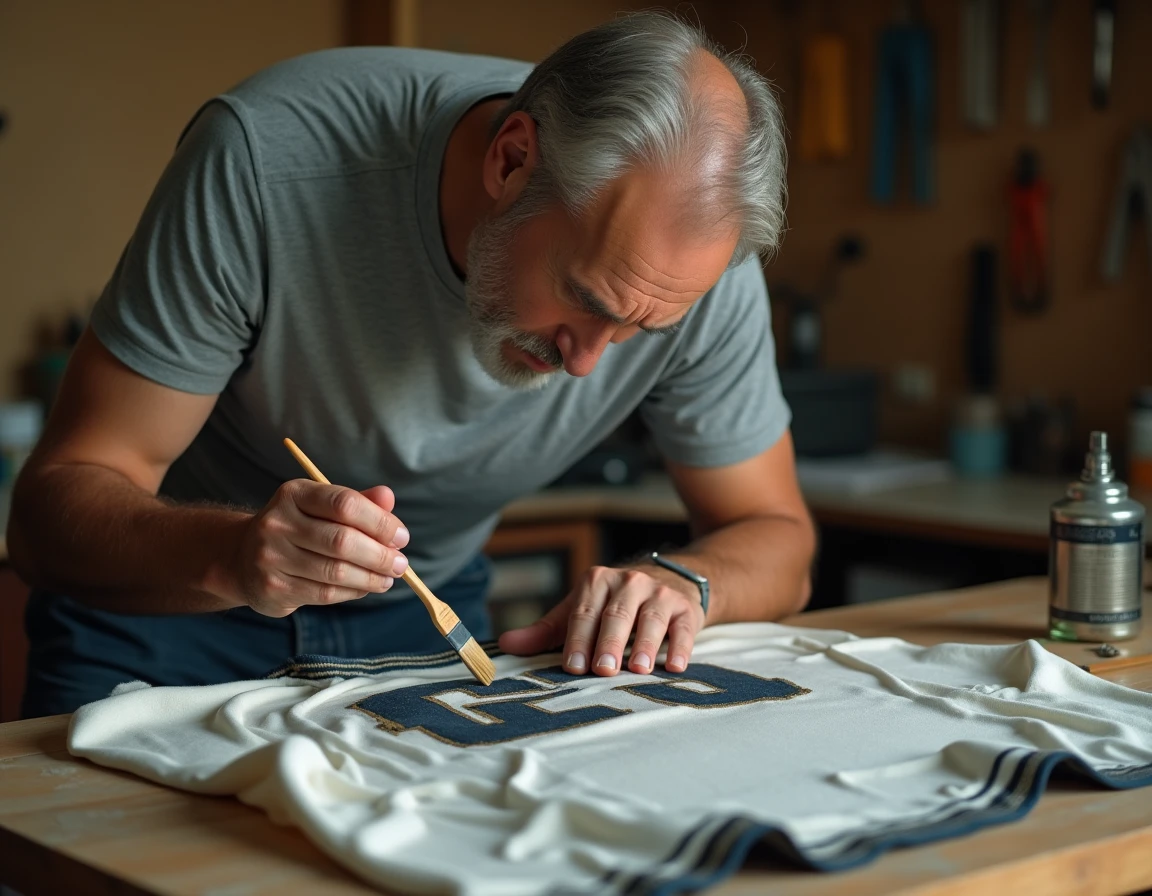
A flocking that begins to lift at the edges does not react the same way depending on the type of film used, the nature of the textile, and the thermal profile applied during the initial application. Before pulling out the iron, it is essential to identify the cause of the detachment, or risk worsening the situation irreversibly.
Thermal reactivation of flocking: limits of the domestic iron
The iron remains the most commonly mentioned tool in consumer tutorials. However, we have observed a clear increase in burnt or cardboard-like flockings after attempts at home reapplication over several seasons. The reason lies in two parameters that the domestic iron cannot control: uniform pressure across the entire surface and precise temperature regulation.
A household iron delivers localized heat, concentrated on the contact area. The natural back-and-forth motion creates temperature discrepancies between the center and the edges of the design. The result: the edges overheat while the center of the flocking does not receive enough heat to reactivate the thermofusible adhesive.
Film manufacturers like STAHLS’, Chemica, or SISER warn against this practice in their recent technical sheets. Partial reactivation of the glue without pressure control causes “ghosting” (a residual shadow of the design) and a loss of wash durability, even when the flocking appears visually reattached. If you are looking to understand how to reattach lifting flocking without risking further damage, the first rule is to assess the extent of the detachment before any intervention.
Reattaching with an iron: protocol for limited edge detachment
When only a corner or an edge of a few millimeters lifts, the iron may suffice, provided a strict protocol is followed. We recommend attempting this method only on a peripheral detachment of less than one centimeter.
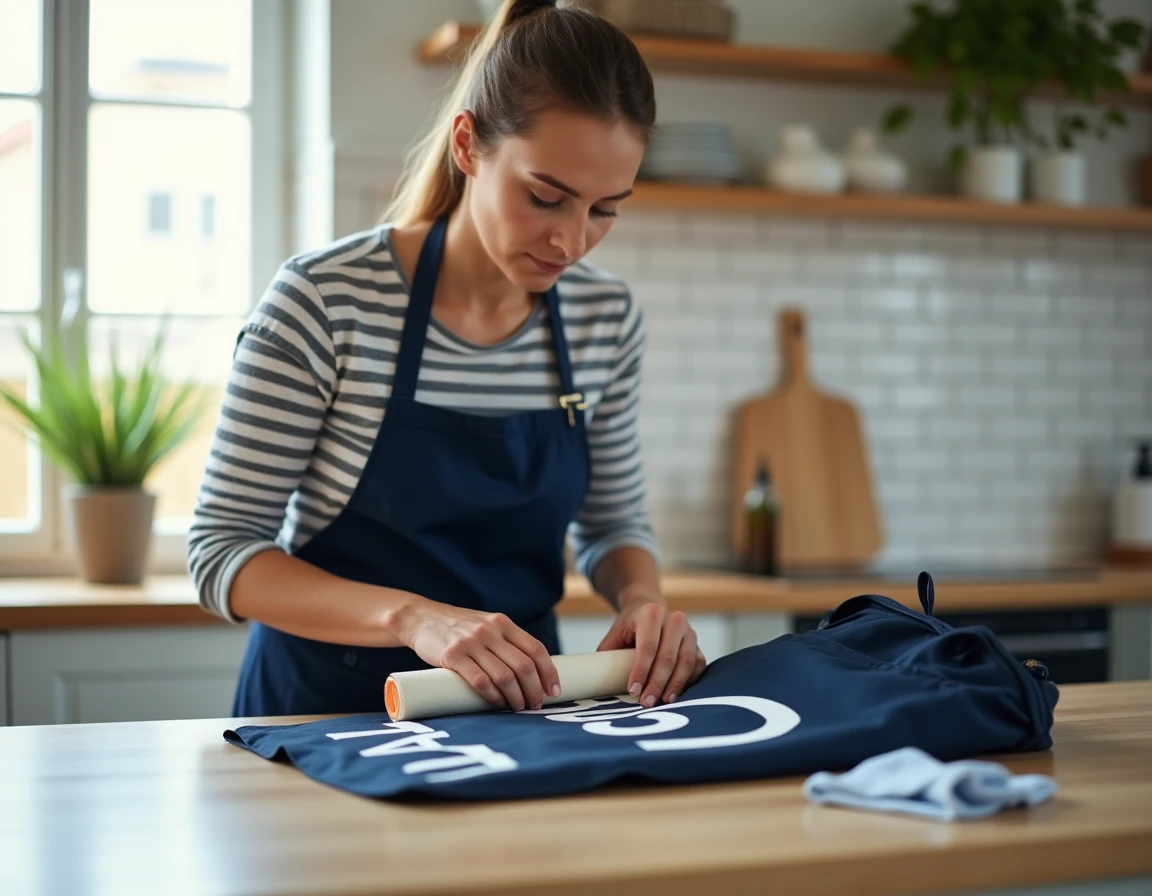
The necessary materials:
- An iron set to the temperature corresponding to the textile (cotton setting for cotton, synthetic for polyester), steam turned off
- A sheet of baking paper or Teflon to protect the design from direct contact with the soleplate
- A hard, flat surface under the textile (cutting board, for example), as the foam of an ironing board absorbs pressure instead of transmitting it
- High-temperature tape to hold the lifted edge in place during pressing
Lay the textile flat, reposition the lifted edge, apply the baking paper. Place the iron without moving it for about fifteen seconds, pressing firmly downwards. Lift, check the adhesion. A second pass may be necessary, but beyond three attempts, the risk of overheating outweighs the expected benefit.
Technical polyester football shirts: a special case
Recent treated polyester shirts (such as AeroReady or Dri-FIT) present a specific problem. The water-repellent treatments of the fabric reduce the adhesion of standard transfer films. Flocking applied to these textiles with a standard temperature profile detaches more quickly and is more difficult to reattach.
On a high-value football shirt (collector’s item, worn shirt, limited edition), we advise against any home reattachment attempts beyond slight edge lifting. The reason is technical: even slight overheating alters the structure of the flex film and complicates any subsequent professional intervention, whether it involves a clean reattachment with a press or a deflocking followed by a new application.
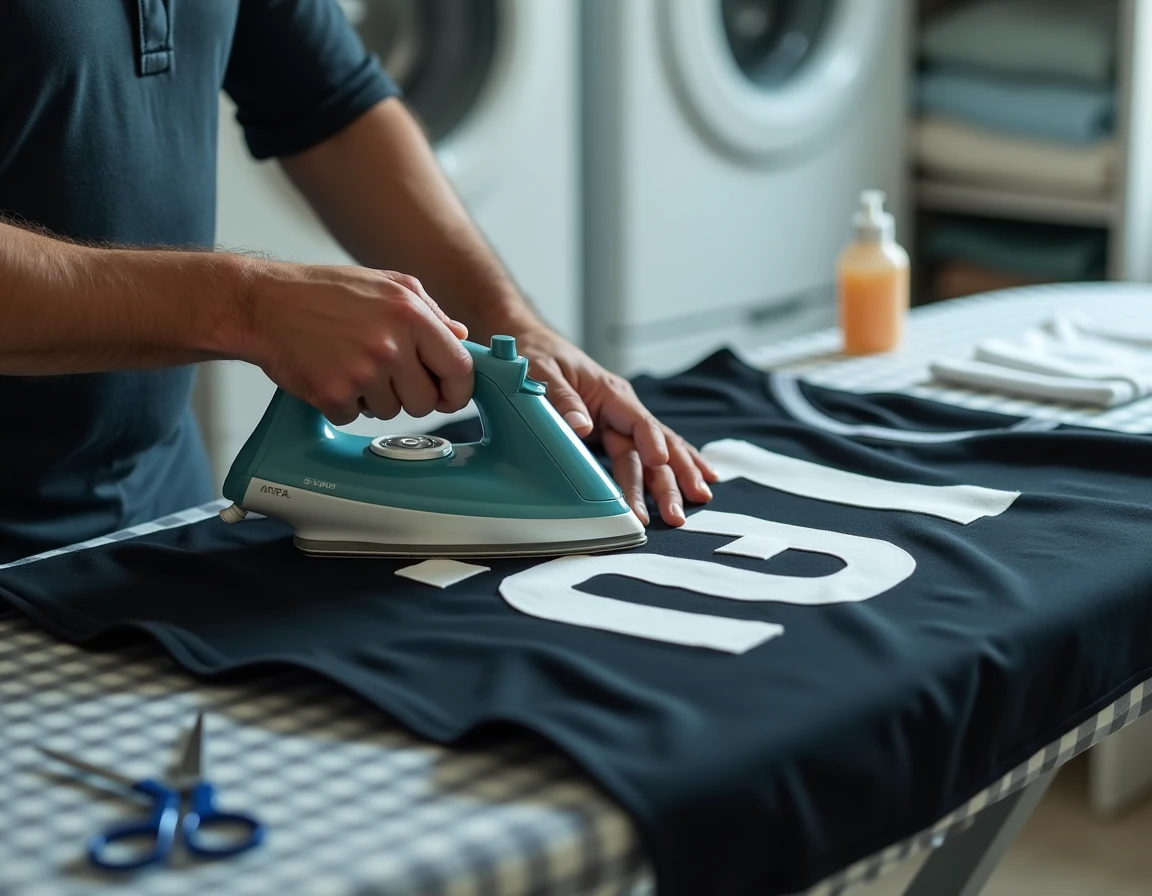
Specialized dry cleaning workshops have hot presses with digital control of temperature and pressure. The difference compared to a domestic iron is comparable to that between a bakery oven and a microwave: the final result is not the same.
Textile flocking maintenance: prevent rather than repair
The majority of premature detachments are related to maintenance, not installation defects. A few simple rules significantly extend the lifespan of a flocking:
- Wash the garment inside out (design on the inside), at a temperature not exceeding 40 degrees, without fabric softener
- Never put the design in the dryer: the circulating heat partially reactivates the adhesive and creates micro-detachments invisible to the naked eye but cumulative
- Iron only on the reverse side of the textile, never directly on the flocking, even with a protective cloth
A properly applied and maintained flocking should never detach. If detachment occurs after only a few washes, the problem likely stems from the initial application (temperature too low, insufficient pressure, too short pressing time) or an incompatibility between the film and the textile.
When to call a flocking professional
As soon as the design lifts over more than one centimeter, the flex film shows cracks, or the textile is a high-end technical polyester, home reattachment is no longer a reasonable option. Each iron pass without lasting results further deteriorates the residual adhesive and the film itself.
A workshop equipped with a hot press can either cleanly reattach the existing flocking with the correct temperature and pressure parameters, or proceed with a complete deflocking followed by a new application. The cost remains modest compared to the value of a collector’s shirt or a personalized garment that is cherished.
Reattaching a flocking is not complex when the detachment remains superficial and the textile is suitable. Beyond this threshold, a professional press remains the only tool capable of ensuring a lasting result without risking turning a recoverable design into thermal waste.