
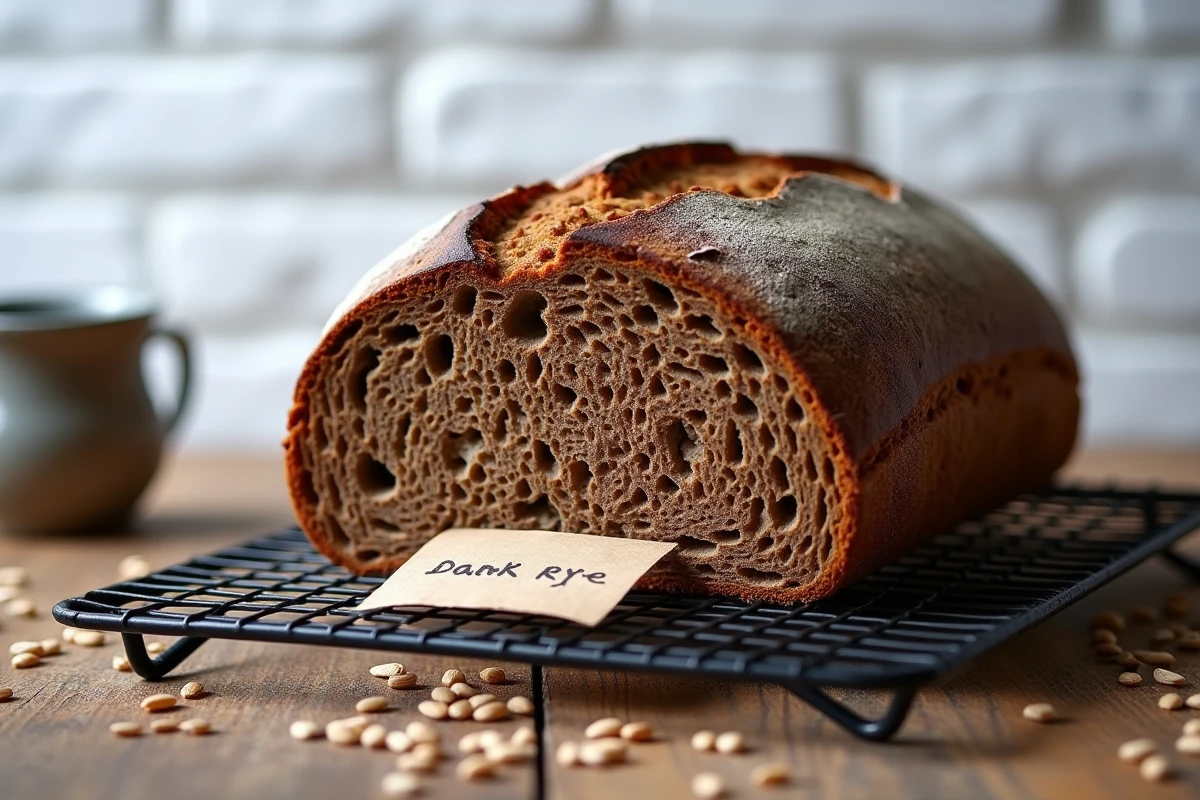
The Nordic bread is unlike any French bread. Dense, dark, with no air pockets, it resembles a compressed block of grains more than a golden baguette. Its base is rye, often whole, mixed with an assortment of seeds and grains that give it this moist texture and deep flavor.
Whole rye and grains: what makes Nordic bread different from classic whole grain bread
Have you ever noticed that a whole wheat bread and a Nordic bread have neither the same texture nor the same taste? The difference goes beyond appearance. It lies in the dominant grain and the form in which it is used.
Whole wheat bread relies on milled flour, even if the whole grain was preserved at the start. Traditional Nordic bread, on the other hand, uses whole or cracked rye grains that remain visible in the crumb. This physical structure of the grain changes everything: digestive enzymes access the starch more slowly.
Rye also contains compounds that are not found in wheat in comparable amounts. Arabinoxylanes, for example, are soluble fibers unique to rye. Lignans, plant polyphenols, are also present in notable concentrations. These molecules contribute to the milder glycemic response observed after consuming whole rye bread, even when the overall fiber content is similar to that of whole wheat bread.
An article detailing the benefits and composition of Nordic bread helps to better understand the role of each ingredient in this mix.

Nordic bread and blood sugar: why rye behaves differently than wheat
Managing blood sugar after a meal is of interest to anyone concerned about their diet, not just diabetics. With classic bread, the blood sugar spike occurs quickly. With Nordic bread rich in whole rye, the glycemic response is lower and more stable.
Several recent Scandinavian studies have confirmed this phenomenon. They show that the intact structure of rye grains slows down the digestion of starch. The specific fibers in rye, particularly arabinoxylanes, form a viscous gel in the intestine that slows glucose absorption.
Why the shape of the grain matters as much as the cereal
Let’s take a simple example. Two breads can contain the same amount of fiber for the same portion. If one is made from finely milled flour and the other from cracked whole grains, the latter will release its energy more slowly. This is a mechanical principle: the more intact the grain, the longer digestion takes.
Nordic bread takes advantage of this principle because its traditional recipe does not require an airy crumb. Density is not a flaw; it is the very mechanism that moderates blood sugar.
The effect of Nordic rye bread on the gut microbiota
The fibers in rye do not just slow digestion. They also feed the gut bacteria, and not just any bacteria.
Research conducted in Finland and Denmark has shown that regular consumption of whole rye bread promotes the growth of butyrate-producing bacteria. Butyrate is a short-chain fatty acid that serves as fuel for the cells of the intestinal wall. It helps maintain the intestinal barrier in good condition and reduces local inflammation.
In practical terms, people who regularly consume this type of bread also experience a decrease in constipation and an increased production of short-chain fatty acids. These effects go beyond the simple “high in fiber” argument seen everywhere. It is the specific fibers in rye (arabinoxylanes, fructans) that produce these results, not just any dietary fiber.
What this changes in daily life
A bread that properly nourishes the microbiota can noticeably improve digestive comfort in a few weeks. Less bloating, more regular transit, better tolerance for hearty meals. It is not a remedy; it is a food that does its job more completely than white bread.
How to recognize a true Nordic bread in the bakery section
The term “Nordic bread” is not subject to any specific regulations in France. Any baker or manufacturer can use it, which creates real confusion between very different products.
Here are the elements to check on the label to distinguish quality Nordic bread from a mere imitation:
- Rye must be listed first in the ingredients. If wheat flour comes before rye, the bread is only Nordic in name.
- The presence of visible whole grains (rye, flax, sunflower, oats) indicates a recipe close to the Scandinavian tradition. A smooth and homogeneous bread has likely been made with refined flours.
- The absence of added sugar or significant amounts of fat. Traditional Nordic bread relies on rye, water, salt, and seeds, without artificial enrichment.
Some breads sold under the label “viking” or “black bread” display very high caloric values per 100 g, while a slice of true Nordic bread remains moderate in calories. The discrepancy often comes from the addition of refined flours, sugars, or oils.
Incorporating Nordic bread into meals without disrupting habits
Nordic bread is eaten differently than a baguette. Its density and pronounced rye flavor make it more filling at equal portions. One or two slices are enough where three slices of white bread would still leave you hungry.
It pairs particularly well with savory toppings: cream cheese, smoked salmon, avocado, radishes. The Scandinavian countries use it as the base for smørrebrød, the open-faced sandwich that constitutes a complete meal. It also keeps better than wheat bread due to its higher moisture content.
Gradually replacing part of your white bread consumption with Nordic bread allows you to benefit from its specific fiber content without a radical change. The palate adapts in a few days to this more rustic flavor and denser chew, and digestive comfort generally follows in the weeks that follow.